












I leader dell'UE si preparano a scontrarsi sul prossimo bilancio europeo e sul futuro sostegno all'Ucraina in un vertice cruciale a Bruxelles
Il terreno è pronto per un vertice teso a Bruxelles, dove i leader dell'UE si confronteranno sulla dimensione del prossimo bilancio e sul futuro sostegno all'Ucraina.
 PUBBLICITÀ
Sul tavolo ci sono due proposte.
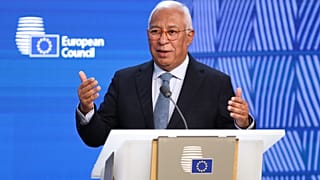
La prima, presentata dal presidente del Consiglio europeo António Costa, è un bilancio settennale da quasi 1,7 trilioni di euro, che secondo alcuni leader è troppo e secondo altri è troppo poco.
La seconda, proposta dalla Commissione europea, è un prestito di sostegno da 45 miliardi di euro per l'Ucraina, finanziato tramite debito congiunto. Quattro Paesi, Slovacchia, Repubblica Ceca, Ungheria e Budapest, vogliono rinunciare al prestito, irritando i donatori bilaterali di Kiev.
Sebbene il bilancio e il prestito siano tecnicamente distinti, a livello politico si sono intrecciati, creando una combinazione potenzialmente esplosiva. In fondo, riguardano entrambi il denaro.
"Ora è il momento per tutti i leader che partecipano a questo dibattito di farlo con una mente aperta, con un approccio costruttivo nel senso del compromesso, perché dobbiamo approvare questo bilancio (entro) la fine di quest'anno", ha detto Costa giovedì mattina.
Sul tavolo c'è anche la successione di Christine Lagarde alla guida della Banca centrale europea. Il candidato della Spagna, Pablo Hernández de Cos, ha preso il comando rispetto all'olandese Klaas Knot ed è ampiamente indicato come favorito per ottenere il ruolo di vertice.
Segui il live blog in inglese di Euronews.

 ${title}
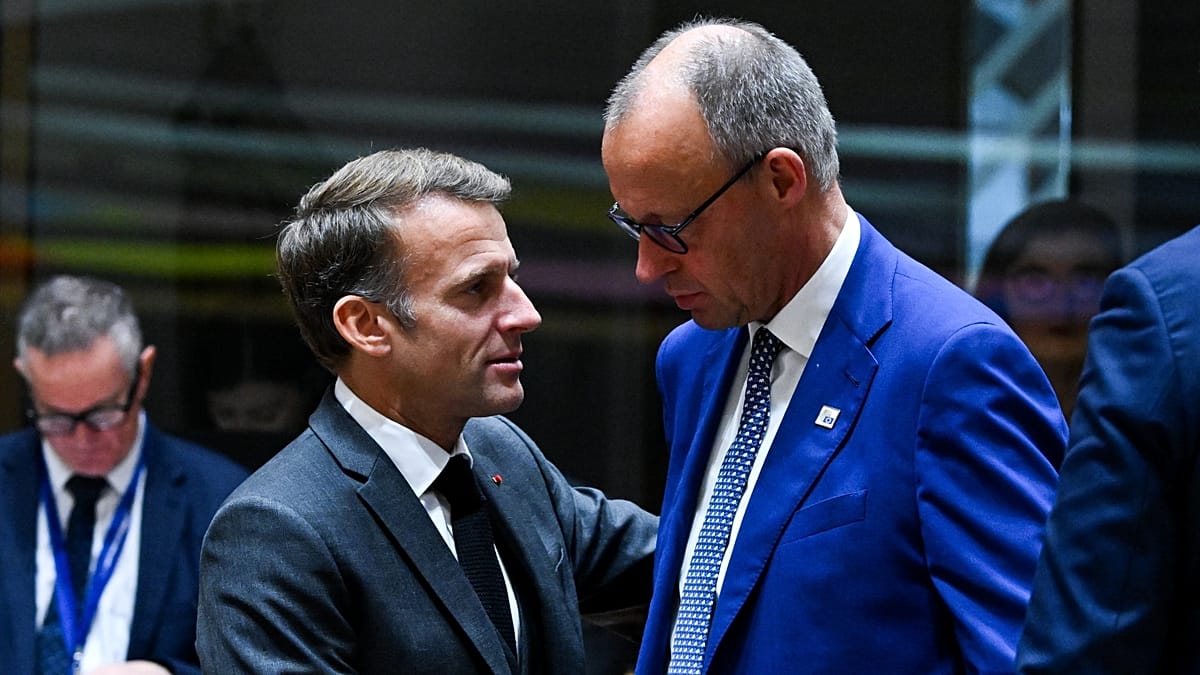
Macron to represent Spain at EU summit
French President Emmanuel Macron will represent Spain at the EU summit, as Spanish Prime Minister Pedro Sánchez prepares for Sunday's snap election, Euronews has learned.
Given the "close personal relationship" and "strong political rapport" between Sánchez and Macron, Macron is representing Madrid at the Brussels summit.
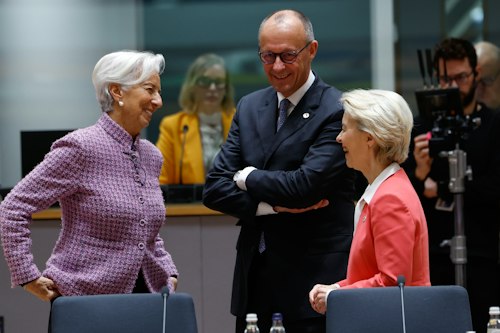
Lagarde's last EU summit
It's farewell to Christine Lagarde.
This is the last time she attends an EU summit in her capacity as European Central Bank president, a role she has held since 2019. Lagarde will step down in February, more than eight months before her term was set to end. A skilful communicator with decades of experience in financial circles, Lagarde has earned the respect and admiration of eurozone leaders.
These very leaders will today discuss her succession and quite possibly choose a new ECB president. Spain's candidate, Pablo Hernández de Cos, has taken the lead over Klaas Knot from the Netherlands and is widely tipped to snatch the top job. Spain has never held the position.
Interestingly, Spain's prime minister, Pedro Sánchez, is not in Brussels to witness the moment: he's fighting for re-election back home.
Credit: Associated Press.
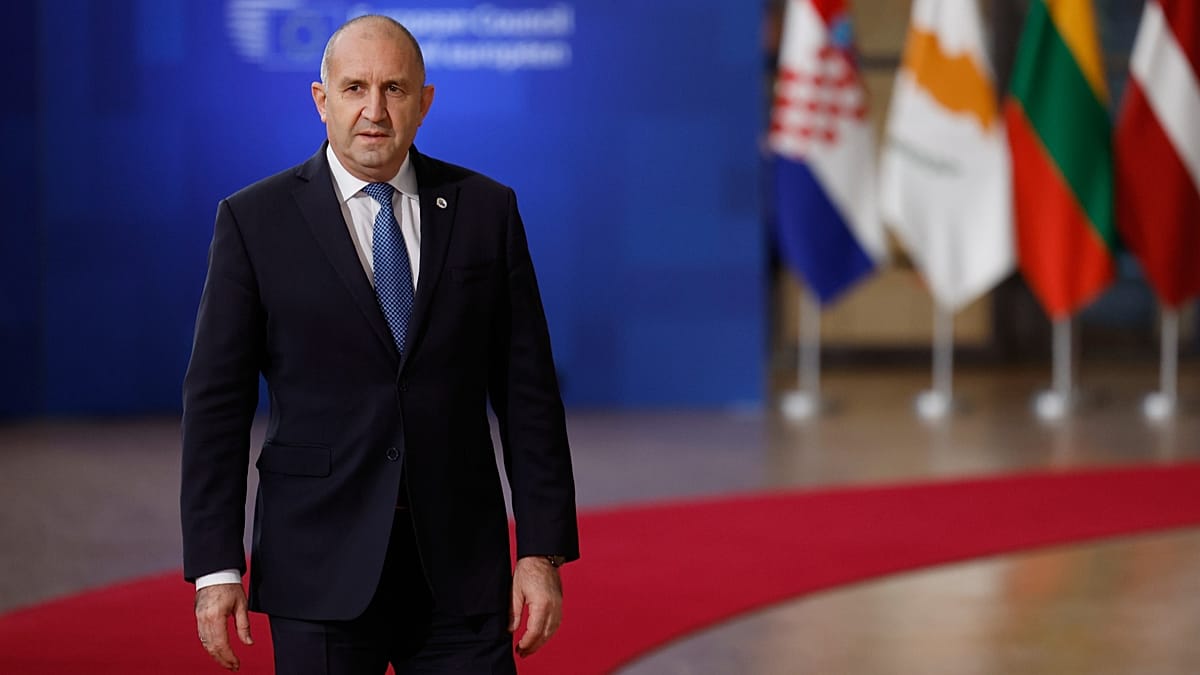
After initial reluctance, Bulgaria says it's 'ready' to join €45 billion Ukraine loan
Bulgarian Prime Minister Rumen Radev has confirmed his country will join the European Union's new €45 billion support loan to Ukraine but will refuse to contribute to the purchases of weapons and ammunition.
Read the full story.
After initial reluctance, Bulgaria will join €45 billion Ukraine loan
Bulgaria will contribute to the new €45 billion support loan to Ukraine, Prime Minister Rumen Radev confirmed on Thursday. But the country will not help pay fo…
Denmark rejects €12bn annual hike in EU budget contribution
Denmark's Prime Minister Mette Frederiksen has ruled out accepting the EU budget proposal in its current form after estimates suggested it could raise the country's contribution by around 12 billion Danish kroner (€1.6 billion) a year.
"What is on the table now, we will not say yes to," the Danish PM said.
Copenhagen is instead calling for a smaller overall budget, accompanied by tougher spending choices and a shift towards defence, security, competitiveness and the green transition.
Frederiksen stressed that Denmark was not opposed to an increase in EU spending altogether, but argued that the bloc must move away from its traditional spending priorities to reflect the geopolitical and economic challenges ahead.
Italy’s Meloni and Romania’s Dan to represent ‘Friends of Cohesion’ in budget talks
The 17 EU member states in the “Friends of Cohesion” club have met ahead of the European Council to agree on a common line ahead of the negotiations on the bloc’s long-term budget.
According to a note shared by the Italian Prime Minister’s office, Italian Prime Minister Giorgia Meloni and Romanian President Nicușor Dan were mandated by the rest of the group to represent their common position during the negotiations, expected to take place in small groups rather than in a one-to-one format to speed up the process.
During the meeting, Meloni reiterated the need to stop the continuous reduction of the overall size of the next EU budget, and to protect the resources earmarked for the agriculture and cohesion policy.
Denmark's Frederiksen backs higher defence spending
Denmark's PM, Mette Frederiksen, pushed back against criticism that efforts to reduce the EU's next long-term budget could undermine EU defense spending. She insisted that the bloc must spend more on security even if its overall budget is smaller.
"We need to put more money into what we must expect to be the future challenges. That includes defence and security," Frederiksen said.
The Danish leader said the government wanted a greater share of EU funding directed towards defence and security, citing a more dangerous geopolitical environment.
Frederiksen said that agriculture and cohesion have traditionally dominated EU spending but argued that the priorities must change as the bloc faces growing pressure from Russia.
"I consider Ukraine to be Europe's first line of defence right now," the Danish PM said.
"If Ukraine falls, I believe there is a significant risk, particularly when looking at all the other hybrid attacks we see from Russia every day against the rest of us, that Russia could move further and potentially extend the war to other parts of Europe."
Frederiksen said that financing Ukraine should be treated as a collective EU responsibility, warning against individual member states refusing to contribute. She also suggested the EU to seek financial contributions from partners outside the bloc, considering Ukraine faces a funding gap in 2027.
Ireland ‘strongly opposed’ to EU digital tax
Ireland’s PM Micheál Martin has told European Council President Antonio Costa that his government is strongly opposed to the digital tax proposed as part of a new compromise to finance the EU's next long-term budget.
“We've been arguing for quite some time that Europe is reducing competitiveness and we feel in principle a digital tax is sending out all the wrong messages. And represents and reflects perhaps an absence of coherence in terms of that competitiveness agenda,” he said.
Martin said that Ireland took part in good faith in the BEPS process, an international effort led by the OECD and G20, to stop multinational companies from exploiting differences between national tax systems to avoid paying taxes where they actually do business.
“At that time there was a clear agreement and acceptance that, if we participated in the BEPS process and agreed with pillar one and pillar two, that a digital tax would not be pursued. Ireland participated, agreed, and changed our corporate tax structures in line with the agreement,” he added.
Austria's Stocker slams EU opt-outs on joint Ukraine support
Austrian Chancellor Christian Stocker has said no EU member state should be allowed to opt out of the bloc's planned joint support package for Ukraine.
Four countries – Hungary, Czechia, Slovakia and Bulgaria – have said earlier, that they will not take part in any future joint debt.
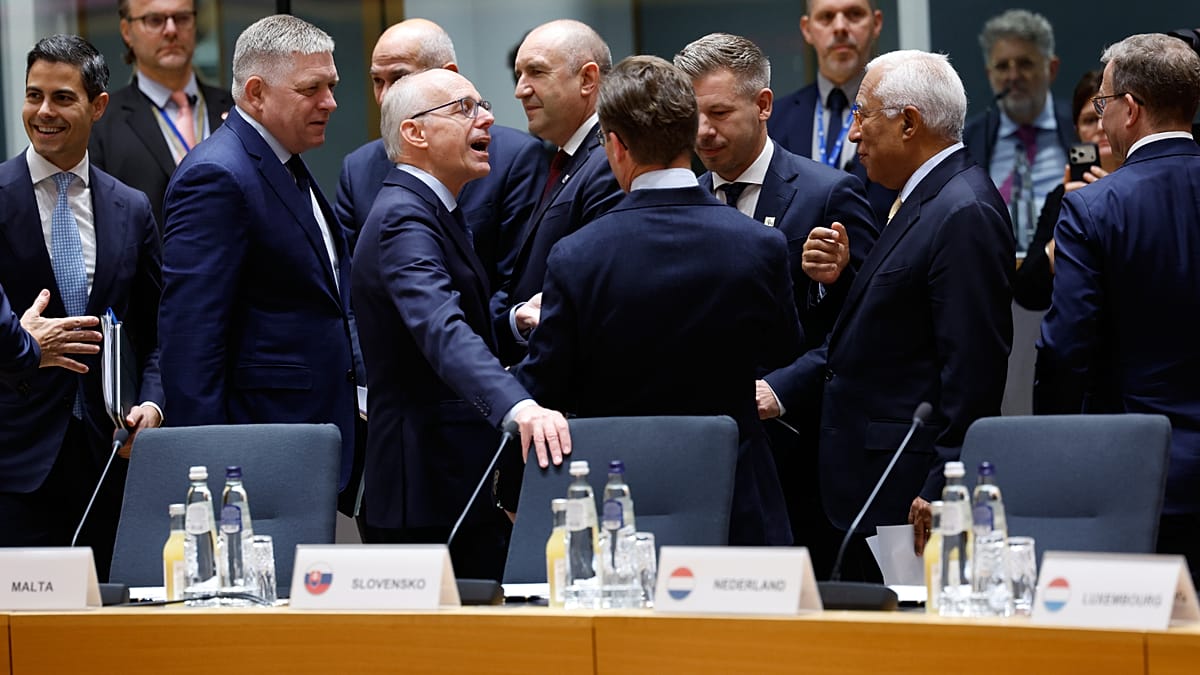
Bulgarian Prime Minister Rumen Radev confirmed upon arrival that his country would participate in the loan, but only the €20 billion earmarked for budget support. Bulgaria will not contribute to the €25 billion foreseen for military aid.
"This is about solidarity. It's not a one-way street, and we need a joint solution. Opting out is not a path that I believe can be successful here in the future," Stocker said.
He welcomed the removal of corporate taxation from the latest budget proposal, but warned that Austria considers the total size of the budgetary framework too high.
"The issue of own resources has been removed from the proposal. That's progress I acknowledge. But the total amount is too high," he said.
Stocker added that agricultural funding must be safeguarded in the next EU budget.
EU summit begins with the economy
The EU summit has formally begun.
The first item on the agenda is an exchange on the economic situation with European Central Bank President Christine Lagarde, whose succession leaders will have to discuss later today.
The #EuroSummit starts now.
— António Costa (@eucopresident) November 26, 2026
Together with Presidents @Lagarde and @Pierrakakis, EU Leaders will discuss the latest European and global economic developments. pic.twitter.com/goQZIiLr9C
'Europe must remain capable of acting and become sovereign,' Merz says
German Chancellor Friedrich Merz said the EU's next seven-year budget must prioritise economic prosperity, the completion of the single market and stronger European defence capabilities.
"Europe must remain capable of acting and become sovereign," Merz said, describing this as the guiding principle for the next Multiannual Financial Framework, the bloc's budget for 2028-2034.
Merz called for a more economically competitive and strategically autonomous EU, arguing that the bloc must remain capable of acting in an increasingly challenging global environment.
However, the German leader acknowledged that negotiations were only at an early stage, with significant differences between member states, but noted he detected a willingness to move ahead.
"I want us to approach the discussions constructively. I also see a willingness to compromise," Merz said.
Germany links EU budget deal to Ukraine funding, wants all EU countries to contribute
Germany's Chancellor Friedrich Merz has said there is a direct link between negotiations on the EU's next long-term budget and continued financial support for Ukraine, signaling that Berlin is unwilling to repeat last year's compromise, when Slovakia and Czechia opted out of the EU’s €90 billion financial support loan for Ukraine.
"We can't repeat last year's compromise," he said, adding that there were still ways to resolve the issue, pointing to the December summit.
Earlier this month, Merz sent a letter to Council President António Costa saying Germany would not support the bloc's budget unless all 27 member states would back Ukraine financially.
Merz said Ukraine must receive sufficient military and humanitarian assistance, including support to get through a difficult winter and finance its reconstruction.
He argued that the EU's ability to act collectively is at stake, insisting that decisions on EU funding should involve all 27 member states instead of smaller groups.
Merz: Supporting Ukraine is about ending the war, not prolonging it
German Chancellor Friedrich Merz rejected suggestions that continued EU financial and military support for Ukraine risks prolonging the war.
"What we are doing here is not to prolong the war. We are doing it to end the war as quickly as possible," he said.
Merz also stressed the humanitarian dimension, warning that the EU must help Ukraine through a difficult winter and support its reconstruction.
He argued that ending the conflict is also in Europe's interest, warning that a prolonged war could trigger further refugee movements from Ukraine.
Croatia’s Plenković doubles down on border dispute with Montenegro
Andrej Plenković, Prime Minister of Croatia, insisted that Montenegro needs to settle the border dispute before it can join the EU.
“Why do we want to resolve this issue now? We want to resolve the border issue first, because this provisional regime has already been in place for almost twenty-odd years. So there's no point in something that's temporary lasting this long,” he said.
For the Croatian PM, the bilateral question should be settled based on the principle of the Badinter Commission, and Zagreb will interpret any questioning by Podgorica on the land border as making a territorial claim against Croatia.
Plenković insisted that arbitration was not an option for Croatia, as his government does not trust it following a ruling over the territorial dispute with Slovenia.
He also noted that the bilateral issue Zagreb has with Montenegro is not comparable to the one with Slovenia, since Podgorica was on the side of the aggressor during the Yugoslav Wars, when the country was still part of Serbia.
Cyprus’s President slams Turkey for dodging Russian sanctions
Cyprus President Nikos Christodoulides has slammed Turkey for circumventing sanctions on Russia.
“Turkey is a NATO member state and an EU candidate country, but at the same time is the champion of the violations of the sanctions against Russia,” he said.
The Cypriot leader pointed out that this was the main finding of a recent report by the EU Sanctions Envoy David O'Sullivan, and called on the bloc to act on this fact.
“As the European Union, well, we must not simply make this observation; we must also move on to the next step in relation to this specific challenge. And this is something I intend to raise with my colleagues,” he said.
Analysis: Radev's change of heart is a win for von der Leyen and Merz
Until this morning, the assumption was that four EU countries (Slovakia, Hungary, the Czech Republic and Bulgaria) wanted an opt-out of the new €45 billion support loan to Ukraine. However, one of them has now changed its position.
Bulgarian Prime Minister Rumen Radev confirmed upon arrival that his country would, in fact, participate in the loan, but only the €20 billion earmarked for budget support. Bulgaria will not contribute to the €25 billion foreseen for military aid.
"We are going to contribute, but again, no money from Bulgaria for weapons, no money for (the) war in Ukraine," Radev said.
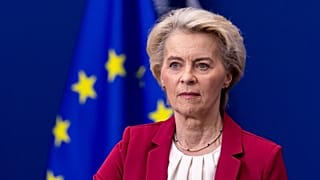
This is a political win for European Commission President Ursula von der Leyen, who had publicly offered governments the chance to opt in "à la carte" to secure the participation of all 27 member states.
It's also a win for German Chancellor Friedrich Merz, who had famously sent a letter threatening to veto the next EU budget if some countries refused to chip in for Ukraine.
Still, the fight isn't over yet. Slovakia, Hungary and the Czech Republic remain opposed to the loan altogether. These three countries are already exempted from the previous €90 billion credit line and are bent on continuing their opt-out policy.
Greece draws red line on cohesion and farm funding
Greek Prime Minister Kyriakos Mitsotakis has said Athens will not accept further cuts to cohesion and agricultural funding in the EU's next seven-year budget.
"We can't discuss a strong Europe with a weak budget," Mitsotakis said, warning against sacrificing traditional EU spending priorities to finance new ambitions.
He said Greece is open to new EU revenue sources and has proposed a common European auction of radio spectrum.
Mitsotakis backed European Council President António Costa's efforts to bridge divisions but insisted a deal must be reached at the December summit, warning that domestic political developments could make a deal difficult to reach.
'Going too far': Bulgarian PM blasts EU's latest Russia sanction plans
Bulgarian Prime Minister Rumen Radev has criticised the European Commission's proposed package of sanctions against Russia, which, among other measures, targets Russian sports figures.
"We are going too far in politicising sporting and cultural events in this way,'" he said as he arrived at a European Council summit focused on support for Ukraine and the EU's next long-term budget.
The European Commission unveiled its latest sanctions package against Russia last Thursday, proposing to ban Russian sports teams and athletes competing under the Russian flag, as well as the display of official Russian symbols, from all sporting events inside the bloc.
It also wants to ban Russian nationals from making financial donations to, or holding positions within, governing bodies of European-based sports federations.
"Sports events can not be a forum for propaganda activities," European Commission President Ursula von der Leyen said last week when unveiling the latest package — the 22nd since Russia's full-scale invasion of Ukraine in 2022.
Brussels aims for a deal on the latest sanctions package in December before the Christmas break.
Who pays the EU’s new taxes?
European leaders are discussing a mix of new EU taxes, known as own resources, to finance the bloc’s next seven-year budget. They include measures involving electronic waste, unrecycled plastic, digital levies, carbon markets and tobacco. But who is going to pay for them?
Euronews breaks down how much each new tax is going to yield in terms of revenues, and who is going to foot the bill.
Spoiler alert: the own resources impact the EU countries asymmetrically, shaping the national position on each of them.
Who pays the new EU taxes? A breakdown of who will foot the bill
EU member states are discussing a package of new Europe-wide taxes to finance the bloc's next long-term budget. But where is the money coming from? Euronews pr…
Estonian PM warns of Ukraine 'winter like hell' as EU funding row looms
Estonian Prime Minister Kristen Michal has warned that Ukraine faces a winter "like hell" and urged the EU to maintain its support for Kyiv.
Leaders at the EU summit will discuss how to fill the funding gap for Ukraine, but four member states – Hungary, the Czech Republic, Slovakia and Bulgaria – have signalled they will not take part in a joint loan.
"Ukraine will probably face a winter that is like hell. They must know that Europe has their back in terms of money. We must decide on Ukraine funding," Michal said, adding that the EU should not cut its defence spending in the next budgetary period.
The prime minister said Estonia's border closure with Russia, which takes effect next week, will boost European security.
"You cannot tolerate attacks on NATO territory, against the defence industry. And Russia has the special services, filtering everybody who crosses the border and taking advantage of that information. So that increases the security of Europe, that we close the east border."
Estonia decided to close the border for six months in response to a wave of Russia-linked hybrid attacks targeting Estonian defence companies.
'Weak economy and expensive energy are holding Europe back,' Kulbergs says
Latvia's PM Andris Kulbergs has warned that high energy costs and excessive bureaucracy are undermining the bloc’s – and represent a key obstacle to reaching a deal on the EU’s next long-term budget.
“The biggest problem is economy,” Kulbergs said, pointing to weak growth as a source of wider instability across Europe.
The Latvian leader said the budget must be concluded this year, given the urgent demands created by the war in Ukraine and the bloc's growing security and defence needs.
However, Kulbergs added that the negotiations are taking place against a backdrop of economic stagnation and political discontent.
Bulgaria will join Ukraine loan but not its military strand, Bulgarian PM says
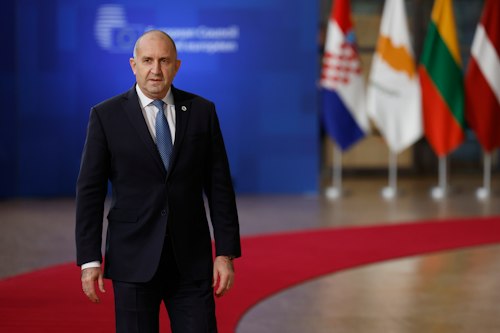
Bulgaria will not seek a blank opt-out of the new €45 billion support loan to Ukraine after all, Bulgarian Prime Minister Rumen Radev confirmed on Thursday morning. Radev had previously said Bulgaria would not take part in the scheme.
Instead, the country will remove itself from the military strand (€25 billion) and only take part in the financial strand (€20 billion).
"We have a huge historical diaspora of 300,000 Bulgarians living in Ukraine. And our wishes and our request (are) to concentrate our support in the areas of the Bulgarian population in Ukraine," Radev said.
"So we are going to contribute, but again, no money from Bulgaria for weapons, no money for war in Ukraine."
Radev says he will discuss the issue with European Commission President Ursula von der Leyen, who presented the loan last week. Von der Leyen said member states with reservations about military support could opt in only to the financial side of the scheme.
While this is good news for the Commission, three countries remain opposed to the loan altogether: Slovakia, Hungary and the Czech Republic. It remains to be seen if they can be brought into the fold.
Credit: Associated Press
Latvia says EU budget plans undermine farmers
Latvia's Prime Minister Andris Kulbergs accused the EU of failing to deliver a level playing field for farmers, arguing that the bloc’s next long-term budget risks entrenching splits in agricultural aid between member states.
“Latvia has been punished for 20 years,” Kulbergs said, describing the country as having the lowest level of agricultural support in Europe.
Kulbergs said the country had come to defend the EU’s core values of reducing inequality and promoting free trade — principles that, in Latvia’s view, are being undermined by the proposed budget.
“We’re seeing in our shops all the products from the countries that are getting the most support for farmers (...) You don't see Latvian products in the European market," Kulbergs said.
'Political motives' may spur on EU deficit warning for Sofia, Bulgarian PM says
Bulgarian Prime Minister Rumen Radev has criticised a recent warning from Brussels over excessive public spending, saying the European Commission "needs" to examine "things" relating to how it "realistically" assesses member states' finances.
"If it does not do so, it means that there are political motives, rather than economic ones, behind our accession to the eurozone," he said as he arrived at Thursday's European Council summit, which is focusing on the bloc's long-term budget.
"How is it that the Commission has only now realised that budgetary funds in Bulgaria are being spent indiscriminately, without the necessary oversight?"
"How is it that inflation in Bulgaria suddenly fell in April to May last year?"
Radev previously described the Commission's warning as a "stinging rebuke" of previous governments' public spending policies.
European Commissioner for the Economy Valdis Dombrovskis warned on Tuesday that Sofia could face a multi-million-euro fine if it failed to address excessive spending "late this year or very early next year".
No real peace negotiations with Russia until spring, Lithuania’s Nausėda says
Lithuania’s President Gitanas Nausėda said he is pessimistic about the prospect of real negotiations on the ceasefire with Russia until next spring.
"I think the Russians will try to let Ukraine and its people suffer one more terrible winter, and they treat this possibility as a kind of leverage,” he said.
Nausėda insisted the EU as a whole should support Kyiv, because the Ukrainians are not just fighting for their freedom but for the freedom of the whole of Europe.
“Ukraine could and should negotiate from the strongest side. If they feel this deficit of financial resources or military equipment, of course, the Russian Federation will be in a better position to start negotiations,” he continued.
Latvia says EU budget must stop penalising countries defending its eastern border
Latvia's PM Andris Kulbergs has demanded a bigger share of the EU's next long-term budget, arguing that countries defending the bloc’s eastern border should no longer face economic burdens while carrying more and more for security and defence.
"We remember that there was support in Europe when it was about migration. And now it's the eastern flank's turn, because we are the ones defending the EU's border," Kulbergs said.
"The Baltics need to get the support to get our economy up to speed, so we can allocate resources for defence."
Cohesion and supporting Ukraine are both about solidarity, Lithuania’s President says
“For me, both issues are a matter of solidarity. First, the solidarity with Ukraine and the second, solidarity within the European Union,” said the President of Lithuania, Gitanas Nausėda.
For the Lithuanian leader, Costa’s proposal on the EU budget is a very good starting point for the leaders’ discussion. Still, he criticised the cuts to the Connecting Europe facility, the funding program for infrastructural projects.
“What disappoints me a bit, of course, is the reduction of national envelopes. My country has not completed the conversion process. We are at 90% of the European Union average. Our farmers receive only about 80% of direct payments of European Union average,” he said.
For Nausėda, it is also not fair that regions in the far north of the bloc receive additional financial support, while that is not the case for the regions at the eastern border despite the daily threats from Russia and spillovers from the war in Ukraine.
Black Sea security to feature in EU talks as Romania warns of wider regional risks
Black Sea security will be raised during the talks as Romania seeks to keep the strategic importance of the region high on the European agenda amid the war in Ukraine, the country's President Nicușor Dan told reporters.
Dan said the issue would feature in informal discussions with other EU leaders, following a dedicated session on Black Sea security at NATO.
“Black Sea security will also be raised,” Dan said, adding that the issue continued to feature in discussions with Romania’s allies within the Alliance.
The remarks underline how the war in Ukraine has placed the Black Sea at the centre of European security concerns, with the conflict carrying risks beyond Ukraine’s borders.
Romania borders the Black Sea and sees the region’s security closely tied to the outcome of the war and the broader relationship between Russia and NATO.
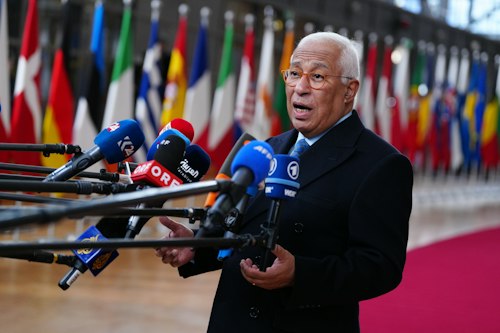
Costa calls on leaders to have 'open mind' and 'compromise' on EU budget
European Council President António Costa, the moderator-in-chief of today's talks, has urged the 27 leaders to have an "open mind" and move beyond their red lines on the EU budget. Costa has tabled a revised proposal worth €1.7 trillion for seven years.
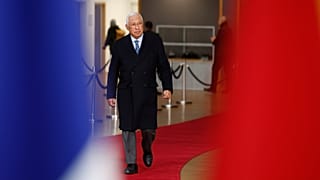
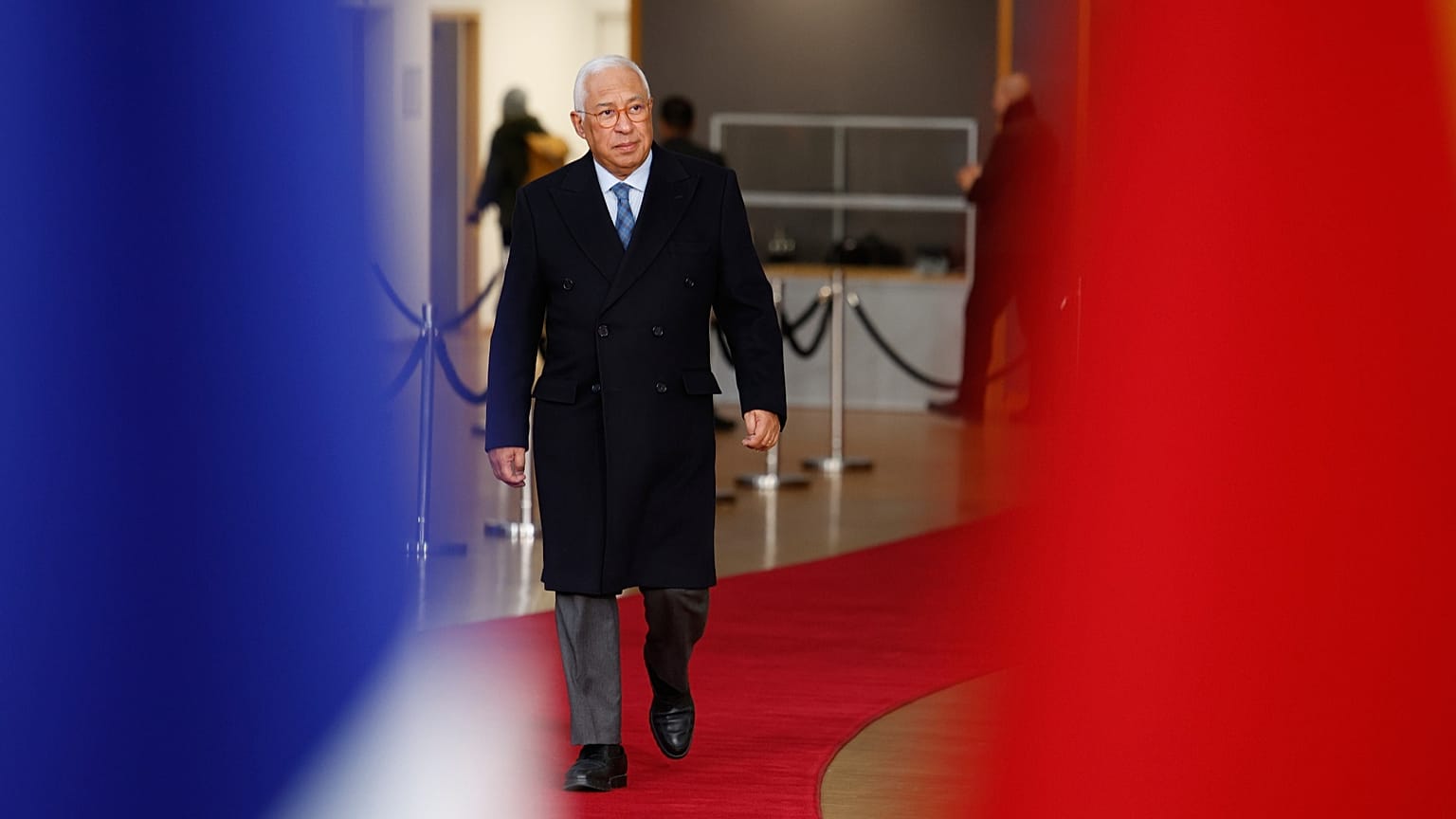
"Now it's time for all of the leaders participating in this debate with an open mind, a constructive approach in the sense of compromise, because we need to approve this budget (in time). That means by the end of this year, and for this, we need to reach unanimity," Costa told reporters upon arrival.
"The European budget is not like the national budget. It's enough to have a majority now. We need unanimity, and to have the unanimity, all the leaders need to listen to each other, taking into account the positions of the others in order to have a common landing zone."
Costa says he aims to bring leaders "closer" on three main areas: the overall size of the budget, the distribution of its priorities, and the package of EU-wide taxes, also known as "new own resources".
"We need the long-term budget fit to fund our main priorities. We need to support our farmers. We need to support our cities and regions. We need to invest more in security, in defence. We need to boost competitiveness, and we need to answer to the expectations of our citizens," he said.
Costa will wait until the end of the day to decide whether the summit should continue on Friday.
Credit: Associated Press.
Romania warns winter may delay prospects for peace in Ukraine
Romanian President Nicușor Dan said the coming winter could make a ceasefire in Ukraine less likely in the short term, as Russia seeks to exploit pressure on the country’s energy infrastructure and civilian population, Romania’s leader said ahead of today's EU summit.
While EU leaders are expected to discuss the possibility of a ceasefire, the Romanian leader expressed doubts that Moscow is currently prepared to end the war.
“I do not believe that Russia is prepared for — or even desires — peace at this moment,” Dan said.
Russia’s strategy, according to the Romanian assessment, is based partly on the expectation that winter will intensify pressure on Ukraine.
“Russia’s current calculation is that winter works to its advantage, as it places additional pressure on Ukraine’s energy infrastructure and on Ukrainian society as a whole,” the Romanian leader added.
Proposed EU budget cuts 'moving in the right direction', Swedish PM says
Swedish Prime Minister Ulf Kristersson said proposed cuts to the EU’s next long-term budget were "moving in the right direction", but warned of tough negotiations ahead of Thursday’s extraordinary European Council summit.
On Saturday, European Council President António Costa proposed a 10% reduction to the European Commission’s almost €2 trillion budget proposal. The cuts aim to appease the 27 EU leaders, all of whom must give unanimous approval to the seven-year budget, which will take effect in 2028.
Asked whether an agreement on the budget would be reached by the end of the year, Kristersson said it would be "difficult".
"We are not in a hurry," Kristersson said, "but we need to finalise it sooner or later."
"We are not there yet."
Romania demands bigger budget alongside 'Friends of Cohesion' group
Romanian President Nicușor Dan said Costa’s latest proposal "is not ideal”
"Europe should show greater ambition for the 2028–2034 period, especially given the many challenges we know exist,” said Dan.
Leading the “Friends of Cohesion” group alongside Italy, the Romanian leader said the countries are having a coordination meeting to discuss the budget throughout the afternoon and tomorrow.
"One of the goals of the "Friends of Cohesion" group was to act in unison. That has been our strength. We are 17 states acting together, and that clearly carries weight,” Dan said.
Czechia’s Babiš rejects link between cohesion funding and Ukraine financing
Czech Prime Minister Andrej Babiš reiterated that he considers it not possible to link the financing of Ukraine with the cohesion funding in the next EU budget.
“Cohesion is really the goal of the European Union and the Czech Republic will fight for this money,” he said. “37 years after the revolution, we don't have any highway to Austria, unfortunately. And we have to build our hospitals; we have healthcare in the first place.”
For Babiš, who has already said Czechia wants to opt out of the incoming new loan to support Ukraine, the financing of Kyiv should be negotiated separately, not together with the rest of the EU budget as requested by German Chancellor Friedrich Merz and other frugal countries.
“The most important is the life of our citizens, and we have to do everything to organise the peace in Ukraine,” the Czech leader said.
'No EU country can opt out of' Ukraine support, Dutch PM says
Dutch Prime Minister Rob Jetten has said that no member states should opt out of the new €45 billion support loan to Ukraine.
But Slovakia, the Czech Republic, Hungary and Bulgaria have already announced they would not take part. For Jetten, whose country is one of the leading bilateral donors to Ukraine, this stance is unacceptable.
"It's crystal clear that the Russian aggression in Ukraine is one of the biggest challenges that we face. And Ukrainians are fighting for their own freedom, but also for European democracy and values," Jetten said.
"We need to stand shoulder to shoulder with the Ukrainians (who) will need more military and financial support in the years to come. And that is something that no EU country can opt out of. Everyone needs to be in solidarity with the Ukrainians, just like the Netherlands has been doing for many years."
Asked about the ongoing peace talks, Jetten called on Russian President Vladimir Putin to engage seriously in the process.
"We don't see any clear indication from the Russian president that he is willing to negotiate a just and lasting peace," he said. "So as long as there's no genuine negotiation, we need to do whatever it takes to support the Ukrainian people."
EU budget 'not acceptable' and must be 'downsized', Dutch PM says
Dutch Prime Minister Rob Jetten, a vocal member of the so-called "frugals", is the first EU leader to arrive at the summit.
His message is crystal clear: the EU buget currently on the table, worth almost €1.7 trillion, is "not acceptable for Dutch taxpayers" and must be trimmed down and re-focused on modern priorities such as defence and migration management.
"The budget needs to be modernised and needs to be downsized, if we want to strike a deal," Jetten said.
Asked about the goal of having an agreement by the end of the year at the latest, Jetten said, "there's no need to hurry", and that what matters is reaching a "good deal" in the end.
"For me there's no deadline," he said, noting he was "ready for the marathon" of the negotiations both this week and in December.
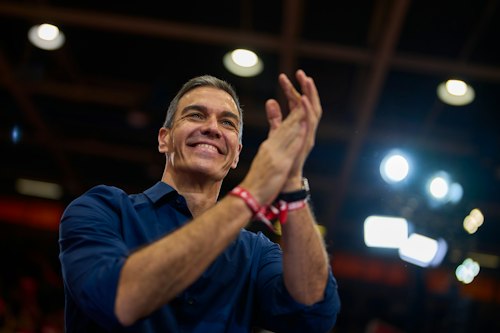
Missing in action: Pedro Sánchez
Europe's most prominent progressive leader, Spain's Prime Minister Pedro Sánchez, will skip today's crucial summit as he fights for re-election at home.
Sánchez called snap elections last month after two housing bills proposed by his left-wing coalition were voted down in Parliament amid housing crisis protests on the streets. Sánchez thought the popular outcry would help him secure re-election, but the conversation has since changed.
Most polls predict the right-wing Popular Party (PP) will secure victory and enter the government in coalition with the far-right, Vox. But Sánchez has a history of defying the odds, so nothing can be taken for granted. We'll find out on Sunday.
Sánchez has already missed two high-profile meetings this month: the informal EU summit in Dublin and the Coalition of the Willing in Berlin.
Credit: Associated Press.
A turbulent summit lies ahead
Good morning and welcome to the Euronews live blog!
Today's summit is poised to be turbulent, to say the least. Two of the EU's most contentious issues are set to collide: the next EU budget and future support for Ukraine. Though technically they are separate, they have become increasingly intertwined, making for a potentially explosive mix. After all, they're both about money.
You can read more in my curtain-raiser.
EU budget and Ukraine aid headed for collision at turbulent summit
EU leaders will have their hands full as they wrangle over the next budget and future support for Ukraine. Both issues make for a potentially unpredictable mix.